
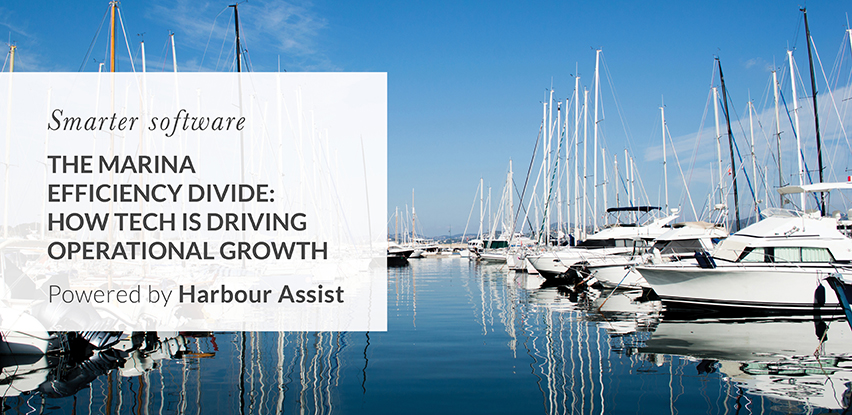
The marina efficiency divide: How tech is driving operational growth
Why are some marinas growing while others feel the strain? Explore the hidden costs of manual operations and how tech could drive you forward.
On the surface, many marinas appear to be in a steady position. Berths are occupied and customer demand remains consistent, so operations continue much as they always have. But when you spend a bit of time behind the scenes a different picture starts to emerge. Some marinas are finding ways to stay on top of operational complexities with tailored technology. Others are feeling the pressure build. And that’s where a divide is starting to open up.
The complexities of running a marina
Marina operators are managing a more complex landscape than they were just five years ago. On a global scale, the sector is dealing with a combination of economic uncertainties, rising operational costs, ongoing staffing challenges, and ever-increasing customer expectations.
According to British Marine, workforce shortages and skills gaps continue to affect marine businesses, particularly in operational roles. This is an increasingly difficult area to improve, especially if you’re running a full service marina where maintenance and repair services are an important part of the business. At the same time, there’s a growing pressure on margins driven by rising energy costs and adhering to regulatory requirements such as the updated Port Marine Safety Code (PMSC).
Marina operations themselves have also become more layered. Flexible berthing, seasonal agreements, dry stacking, and additional services from Wi-Fi to EV charging all add to the administrative load. Customer expectations are shifting too. Boat owners increasingly expect to see the same level of convenience they’d find elsewhere – from simple online payments to clear, swift communication.
From working with marinas across the UK and internationally, this increase in operational complexity is one of the most consistent challenges we see.
The hidden costs of manual marina management
When you take all that complexity and add in the fact that not all marinas are adapting in the same way, that’s where the divide widens.
Many marina operators are often still heavily reliant on spreadsheets and manual processes. Billing takes time to manage, reporting is pieced together from multiple sources and staff are spending a significant portion of their day on administrative tasks. Reliance on manual processes also means that teams are often reactive, based on partial or potentially even out-of-date information.
As these inefficiencies add up the cumulative effect can be surprising, and more importantly, start to impact multiple areas of your business.
Time and resource pressure
Administrative workloads tend to expand during peak season and even more so as the business grows. According to recent research from Fyxer, most UK workers lose almost a full day each week to admin, and marina teams are no exception.
In reality, this means experienced staff are tied up in tasks like invoicing and data entry, limiting the time they can spend on higher-value, customer-facing work. Over time, this restricts your ability to scale without increasing headcount.
Payment delays and cash flow impact
Billing is another area where small inefficiencies can build up. When these processes are manual and you’re potentially juggling mooring fees, pump out fees, or additional service fees, invoices won’t always go out as quickly as intended, and chasing payments becomes an ongoing task.
This makes cash flow less predictable, particularly when peak season revenue needs to support quieter months. It’ll be no surprise to marina managers that typically occupancy dips to around 50% in winter compared to 100% during summer. But it’s during peak season that the admin builds up, often delaying cash coming into the business.
Limited operational visibility
As more information is stored across different spreadsheets and systems, getting a clear picture of performance becomes more time-consuming. Pulling together data on berth occupancy, customer activity or chandlery revenue often means combining information from multiple sources. That takes time and often leads to decisions being made with incomplete or outdated information.
The result is that strategic decisions can be made much later than they should be or without the full picture to support them in the first place.
Customer and digital expectations
At the same time, customer expectations are continuing to evolve. According to Marina Dock Age, “a marina’s digital experience is just as important as its physical one”. Unsurprisingly, this is because most visitors will interact with your digital channels before booking a berth, and most would also like their booking experience to be digital too. In fact “71% of marina visitors would prefer to book their reservations through their smartphones”.
But if you’re operating in a very manual way or using multiple legacy systems, this may not be possible for you right now. This can leave you trailing behind other marinas who are already offering a digital booking experience, online payments and automated notifications and emails.
What this means for marina operators
Time spent on these manual processes carry a real cost, particularly when experienced staff are in short supply. As more and more time is absorbed by admin, there’s less capacity to focus on improving the customer experience or developing new revenue opportunities across the marina.
Cash flow can also become less predictable. Delays in invoicing, even for a relatively small cost, can build up, leaving you in a weaker position financially, and unable to reinvest into areas of the business that may need a lift.
Without access to reliable, up to date reports, vital business information is also limited. That makes it harder to make confident calls around pricing, berth occupancy or service improvements.
As Harbour Assist’s Managing Director, Rachel Hodgkinson, explains:
“We often hear from marina operators who feel busy all the time but don’t necessarily see that reflected in growth. That’s usually a sign that their operational inefficiencies are absorbing capacity that should be driving revenue.”
These inefficiencies don’t just slow teams down, they directly impact revenue, cash flow, and your ability to grow.
Why the marina efficiency divide is widening
As these operational pressures increase, the gap between different ways of running a marina is becoming more visible.
For those still relying on spreadsheets and manual processes, all these challenges tend to compound. Much of the team’s effort goes into keeping processes running rather than improving them.
Simultaneously, the marinas using more tailored software are starting to reduce those challenges. Routine tasks such as invoicing and berth management are handled more consistently and can be sped up with smarter tools and automations. Data is much easier to access, giving teams clearer visibility over occupancy, customer trends, and revenue. Bookings and payments are smoother, and reporting is much easier to act on, meaning hidden costs start to quickly reduce.
Rachel Hodgkinson from Harbour Assist, adds: “What we’re seeing across our customers is that once those core processes are simplified and joined up, the pressure on teams starts to ease. Admin becomes much more manageable and that creates space to focus on improving the marina and the services provided, rather than just maintaining the status quo.”
The impact of the right marina management technology goes far beyond admin; it tends to have a ripple effect across the entire business. Reduced admin leaves your team with more time to focus on customers and respond more proactively to any challenges that may come up. Cash flow remains at a healthier level, simply because invoices are generated quicker and payments become easier for boaters.
Perhaps, most importantly, you have more time to work on exploring new revenue opportunities, and the marina is better positioned to adapt and expand into different services.
We also find that the efficiency divide widens further because the benefits of a purpose-built system tend to grow over time. As you get to know the ins and outs of the software, you’ll discover how each feature connects to the other, keeping all your business data consistent and your workflows significantly faster. Plus, you have a much clearer picture of how every aspect of your marina is running, giving you the insight you need to pinpoint exactly what’s currently working and what needs further development.
Where the marina management sector is heading
It’s all about creating a complete lifestyle destination for boaters, which in turn means introducing more connected, digital systems that flow through every part of the marina – from booking and payments to marketing and maintenance management.
With the right, connected marina management system in place, marinas can operate more efficiently, improve customer experience, and unlock new opportunities for growth.
Want to discuss challenges your marina is facing?
Tell us a bit about your business and what’s important to you, and we’ll show you how Harbour Assist can help you run your marina more effectively. Just book a demo.
Case Studies